
When Writing Isn't Enough: Multimodal Storytelling in Early Primary
"Thank you for caring." A first-grader's simple words show me what multimedia tools actually accomplish. Not more efficiency, but trust.
I'm Achille Kalinda, a bilingual ICT educator at Green Hills Academy, an IB World School in Kigali, Rwanda. For over five years, I've worked with Grades 1 and 2, helping young learners develop confidence and express ideas through technology.
The question I'm asked most often: "What tools do you use?"
But that's the wrong question.
The right question is, "How do you help six- and seven-year-olds discover they have something worth saying?"
The Multimodal Reality
At ages six and seven, writing alone creates barriers. Some learners struggle with letter formation but articulate complex ideas verbally. Others think visually. Fine motor development varies dramatically. Traditional writing-only assignments privilege one type of development while blocking others from engaging with the actual cognitive work of storytelling: narrative structure, sequencing, audience awareness.
Multimedia storytelling, combining text, visuals, audio, and video, removes these artificial constraints.
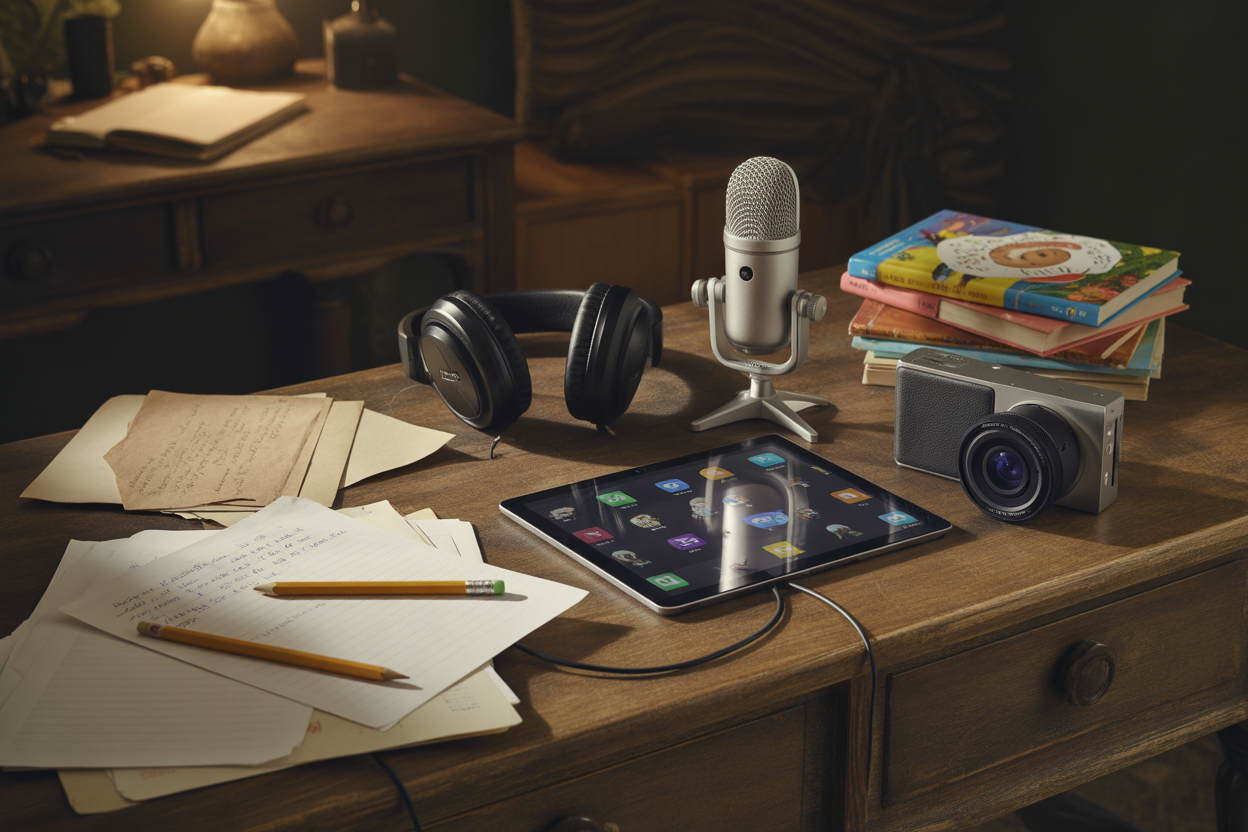
In our bilingual "All About Me" projects ("Tout sur moi" in French, or "Je me présente" in lower grades), learners use Google Slides or Book Creator to express their likes, dislikes, and identities. They add short text, visuals, selfies, and background choices. Book Creator allows them to record audio or video directly on the page, giving them multiple ways to communicate their ideas.
Each project begins with a well-designed cover slide featuring a clear title, personalized name signature, background, and image, often their own selfie, to make the work truly their own. These personalized touches help build ownership and engagement.
The rest of the slides are organized with subtitles, images, and captions, emphasizing organization and creativity. Some advanced learners even add a short introduction and conclusion, finishing with a decorative "The End" slide.
What I love most is seeing learners smile after struggling and finally grasping a skill. Watching learners present confidently and enjoy discovering one another in creative ways is always meaningful. At this age, writing alone can still be challenging, and multimedia storytelling helps awaken both creative and critical thinking by reducing barriers to expression.
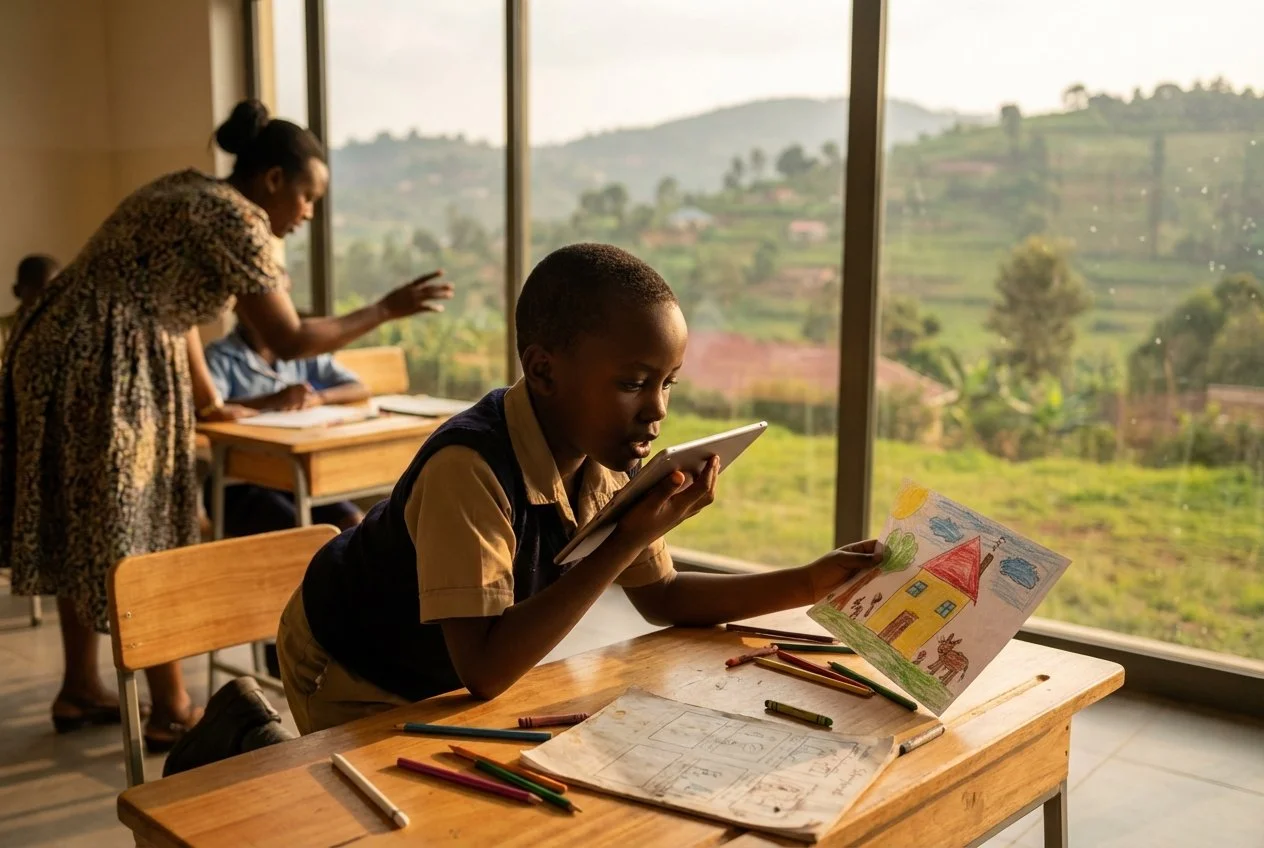
"Thank you for caring." A first-grader's simple words show me what multimedia tools actually accomplish. Not more efficiency, but trust.
The Hidden Breakthrough
One key insight from this work is that every learner carries hidden creativity, and awakening it requires safe spaces and multiple pathways for self-expression.
A particularly meaningful moment occurred when a learner simply said, "Thank you for caring."
This reflected the trust built by giving learners freedom to express their emotions and ideas. This strongly aligned with the IB PYP agency components of "voice, choice, and ownership." But the mechanism isn't the framework or the technology but creating conditions where students feel safe enough to try.
Progression Through Grades
From Grades 3 to 5, learners progress into more detailed storytelling experiences. They engage in animated visual video storytelling using Canva, where they create characters, apply story elements, and design engaging narratives.
Additional storytelling tools include:
Google Sites (Grades 4–5): learners transform stories into websites or blogs
Scratch: basic block-based coding allows learners to build stories, animations, games, and interactive quizzes
Last year, I supported learners in a Global Scratch Challenge in collaboration with schools in Qatar. Learners designed innovative projects addressing global issues such as pollution and deforestation and presented their work to peers and judges via Zoom. These experiences were highly engaging and empowering.
In 2026, our learners will participate in another International Scratch Olympiad focused on pollution, where they will demonstrate ways to protect our planet through creative digital storytelling. This work enhances creativity, global collaboration, interconnectivity, and real-world impact.
The Implementation Reality
What the tutorials don't tell you is that the tools don't work without the relationship.
Learners at my school are equipped with devices in class. But digital familiarity varies depending on access and exposure at home. Some learners initially require more guidance.
Throughout the year, intentional scaffolding, patience, and strong educator-learner relationships help learners adapt, grow in confidence, and become increasingly independent in their creative work.
The difference between successful implementation and mechanical completion isn't the tool selection. It's whether students trust the classroom as a space where their voice matters and struggle is accepted as part of learning.
Beyond Student Work: Portfolio Design
I've facilitated professional development sessions for Primary School teachers on "Effective Student Portfolio Design with Book Creator." The session focused on practical classroom implementation, assessment alignment, and student voice, equipping teachers with strategies they could apply immediately.
Well-designed digital portfolios promote reflection, document learner growth over time, and strengthen learners' metacognition and self-awareness.
But the challenge I've observed is often teachers often expect a tool tutorial. What they actually need is a framework for thinking about documentation, reflection, and student agency. Book Creator is useful because it enables these practices, not because it has particular features.
Unlocking Student Voice
What This Means for Educators
Learning today is no longer about delivering information alone. Information is widely accessible. What truly matters is nurturing creative, innovative, and critical thinking, which is central to mastering 21st-century skills across all subject areas.
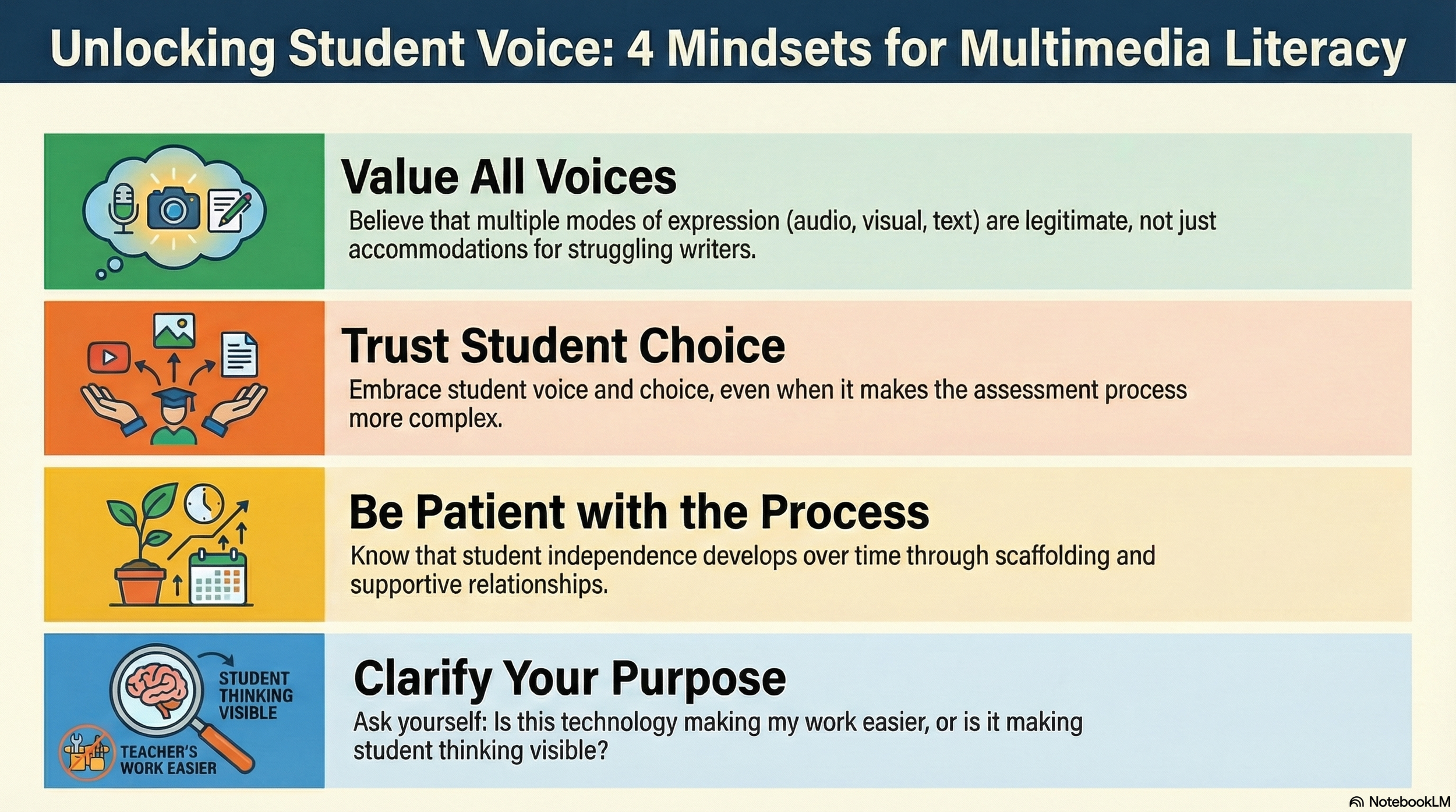
I strongly believe there is high value in educators adopting multimedia literacy approaches. But adoption requires more than technical training. It requires:
Belief that multiple modes of expression are legitimate, not just accommodations for struggling writers
Trust in student voice and choice, even when it makes assessment more complex
Patience with the scaffolding process, knowing that independence develops over time through relationship
Clarity about purpose: Are we using technology to make our work easier, or to make student thinking visible?
The tools I use are accessible and age-appropriate. But their effectiveness depends entirely on the learning environment educators create.
The Ritual That Matters
To energize each session, I kick off with a custom Canva + SunoAI music warm-up clip, which represents my fun-loving "Rocking ICT Educator" classroom identity that the learners truly enjoy. This sets a lively tone and boosts motivation from the start.
This detail matters not because of the music technology, but because it signals something important to learners: this is a space where joy, creativity, and individual expression are valued. The ritual communicates that before any learning begins.
The Real Question
When educators ask me about tools, they're usually asking the wrong question. They want to know which platform, which app, which features. These are implementation questions, not design questions.
The design questions are:
What barriers prevent my students from expressing what they actually think?
How can I create multiple pathways for demonstrating understanding?
What conditions help students trust their own voice enough to share it?
Am I measuring the thing that matters, or the thing that's easiest to measure?
Multimodal storytelling works not because it's more engaging or modern or aligned with 21st-century skills. It works because it gives six-year-olds in Kigali (and everywhere else) the ability to show what they know in ways that work for them, and the confidence that their ideas matter.
That's not a technology outcome. That's a human one.
About the Author
Achille Kalinda is a bilingual (English & French) PYP ICT Educator, EdTech Coach, and Digital Learning Advocate at Green Hills Academy, an IB World School in Kigali, Rwanda. He has over five years of experience helping young learners develop confidence and express ideas through technology, starting in Grades 1 and 2.





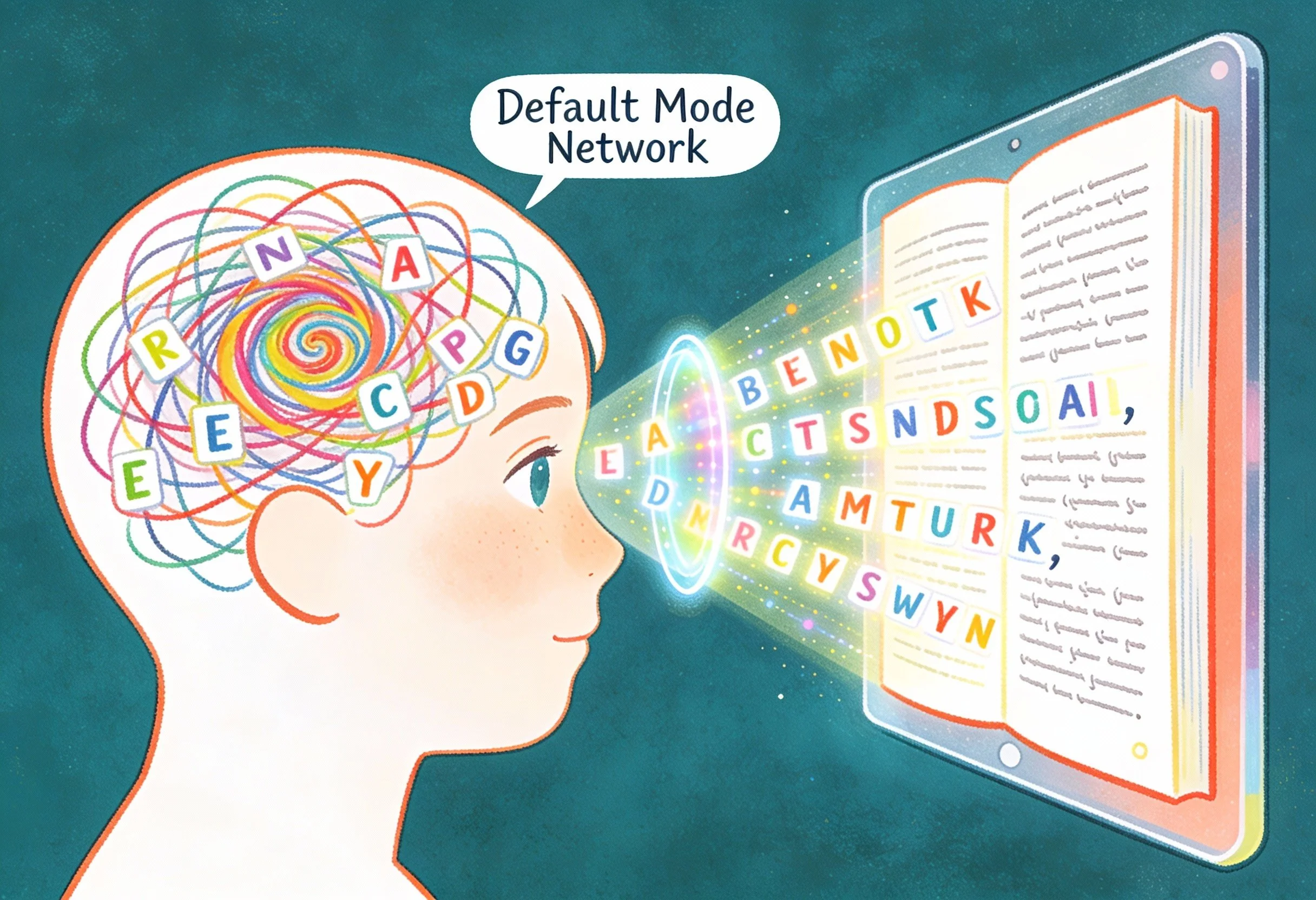


The developing brain works in a way close to this. It grows far more synaptic connections than it will keep and then prunes the ones experience does not reinforce, holding on to the pathways that get used and insulating them with myelin so they connect more thoroughly and a re harder to lose.