How Young Children Think About Thinking And Why It Matters in an AI World
Most conversations about AI and education talk about preserving human skills, but very few ask where those skills come from in the first place. We often rush to talk about solutions without slowing down to understand the roots. When we look at metacognition as a very human skill, it opens a door to something that often gets overlooked. Metacognition does not appear suddenly in adolescence or adulthood. It is a process that begins quietly in early childhood, long before children can explain what they are doing. It shows up in small pauses, tiny experiments, and the way a child checks the world with their hands and eyes. This article is an attempt to make that process visible for parents, educators, and anyone trying to understand how learning really begins and to explain metacognition in simple language and to show why it matters now more than ever.
What Metacognition Is (And Is Not)
Metacognition is the ability to notice what your mind is doing and to guide it. It involves two simple but powerful processes. The first is knowing something about your own thinking. The second is regulating that thinking through planning, monitoring, and evaluating. John Flavell, who first introduced the term, described it as the awareness that thoughts exist and can be directed. Later research expanded this into practical skills like choosing a strategy, checking progress or adjusting an approach when something is not working.
It is not a complicated or abstract idea. It is not extra intelligence, and surely it is not a personality trait. Metacognition happens in the moment when a person becomes aware of their own thinking and uses that awareness to make a choice. Children and adults both do this, although in very different ways.
The Roots of Metacognition in Early Childhood
We often assume that metacognition is something that develops later, when children can talk about their thinking. The truth is that the foundations appear much earlier.
Researchers across different decades, from early 20th-century thinkers like Vygotsky to contemporary voices like Gopnik, have all observed that children experiment, predict, revise and adjust long before they can explain what they are doing.
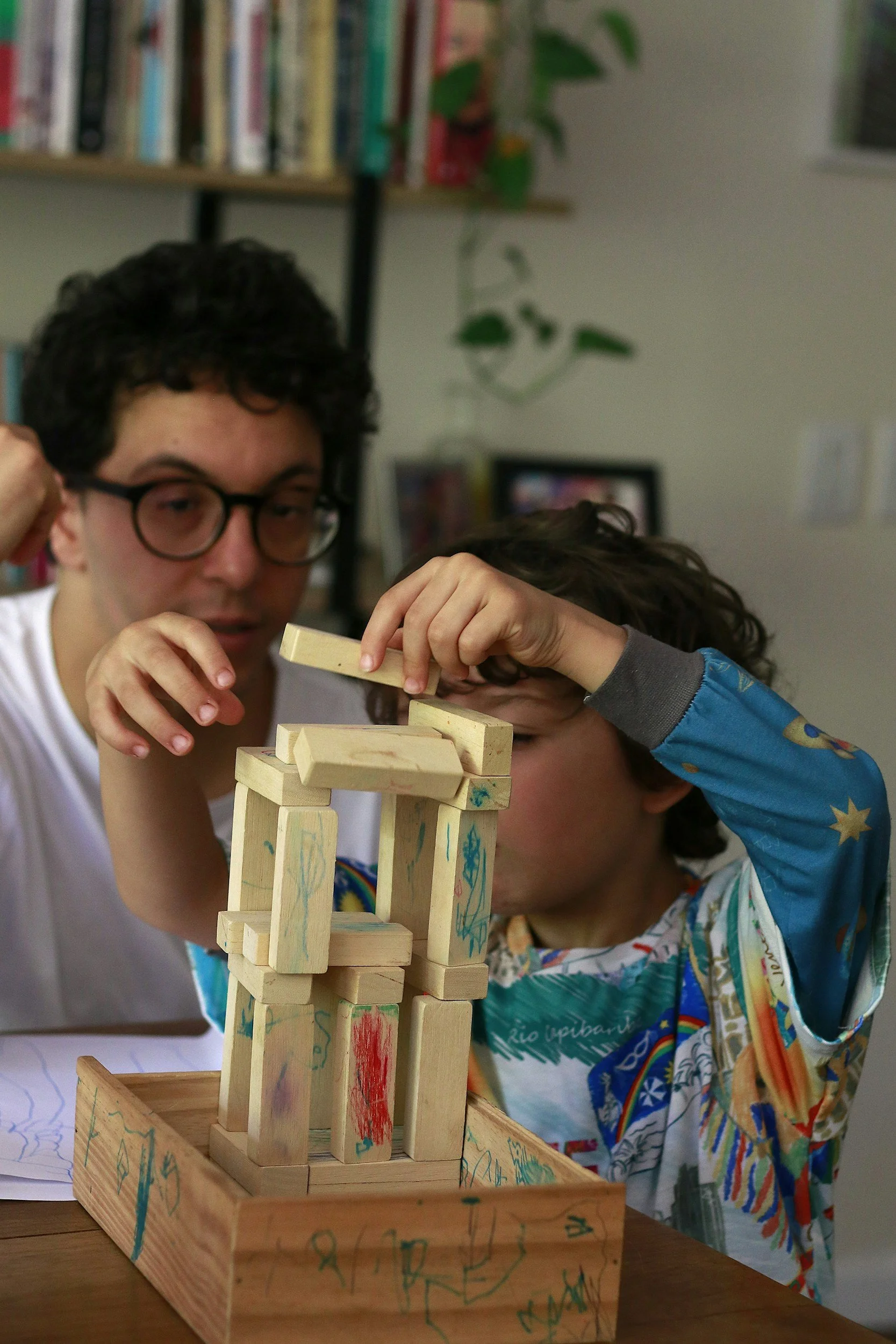
Children learn by participating in shared meaning-making, where an adult’s presence helps them stretch just beyond what they can do alone
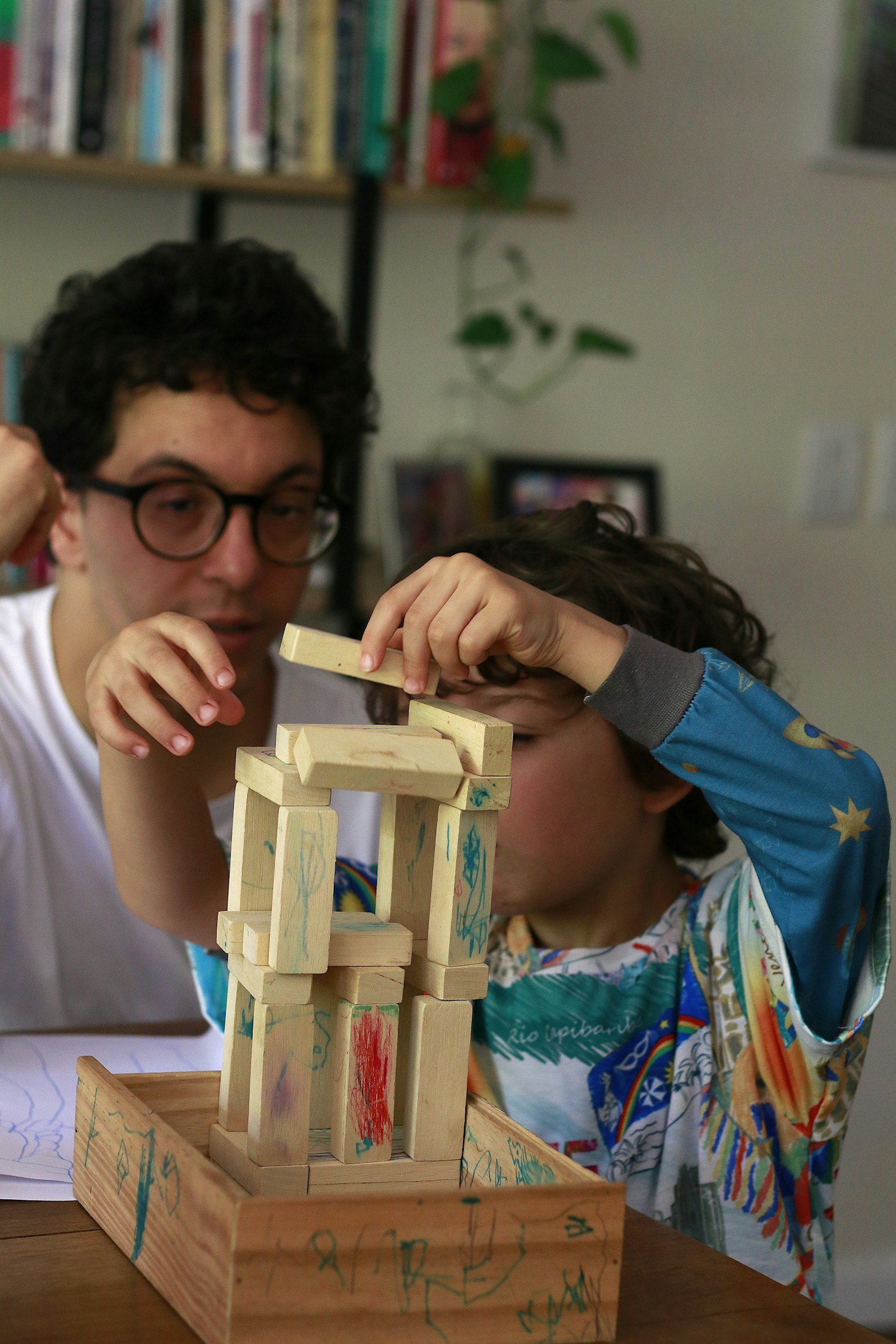
Alison Gopnik, a developmental psychologist known for studying how young children reason and explore the world, describes toddlers as tiny scientists who learn through experiments, predictions, and revisions. Her work shows that young children test ideas, notice patterns, and adjust their approach long before they can explain what they are doing. I see this every day in my own home. My son is two, and when he builds towers with his magnetic tiles, he checks stability with small taps of his hand. When he cannot fit a lid onto a container, he adjusts the angle and tries again. When he climbs a step that feels uncertain, he looks back at me to confirm his judgement. None of this is random. These are early metacognition behaviours. He is monitoring, evaluating, and correcting in real time.
Lev Vygotsky, whose work shaped very much of what we know about social learning and guided participation, showed that children learn by participating in shared meaning-making, where an adult’s presence helps them stretch just beyond what they can do alone. This is the beginning of guided metacognition. David Kolb’s experiential learning model, one of the most recognised frameworks for understanding how people learn through cycles of experience and reflection, suggests children naturally move through trying, noticing, and adjusting. This model is widely used in education and professional training because it highlights reflection and adjustments as essential parts of learning. And although Kolb did not describe his cycle as metacognition, the reflective structure he maps is one of the clearest examples of metacognitive thinking in action.
Antoine de La Garanderie, a French educator who was writing about reflective learning long before we had the modern language of metacognition, adds another layer here. He noticed that children learn more effectively when they have time to notice what they are doing, pay attention to how someone feels or looks, and make small adjustments. He was describing the same early processes we now recognise as metacognitive skills, like checking progress, noticing a mismatch, choosing a different approach, or pausing before trying again.
Children do not need vocabulary to think about their thinking. They do it with their bodies first, through curiosity, repetition, and the quiet moments when they pause, test something, and adjust. They also do it by watching adults and borrowing their way of pausing, checking, and trying again.
How Environments Shape Early Metacognition
Metacognition does not appear in a vacuum. It grows in environments that respect a child’s attention, sensory needs, rhythms, and agency. A space that allows exploration without rushing, noise, pressure, or constant interruption supports metacognitive development. Environments that are too fast, too directive, or too overstimulating leave very little room for reflection.
Adults play a central role here, not by teaching strategies, but by modelling them. When an adult narrates their thinking out loud, the child hears the structure of metacognition long before they can use it themselves. When an adult slows down, observes, and follows the child’s lead, the environment becomes a partner in learning rather than a barrier.
A reflective environment is not a special room or a particular method. It is a certain way of being with a child, where their thinking is visible, respected, and invited to grow.
Why Metacognition Matters in the Age of AI
AI can process information at incredible speeds, but it does not reflect on its own thinking. It can adjust an answer, explain a mistake, or try a new approach, but these behaviours do not come from internal awareness. An AI system does not notice anything about its process. It does not choose a strategy for personal reason or sense when something feels right or wrong. It predicts the next piece of language that fits the patterns in its training data and the prompt in front of it.
This is why AI can give the impression of metacognition without actually having it. Modern systems are very good at simulating reflection. They can revise an answer when asked, detect contradictions, and produce explanations that sound thoughtful. But all of this comes from external patterns, not from self-observation. There is no inner monitor, no motivation, no values guiding the choice, and no awareness of why. AI does not experience “I made a mistake” or “This strategy is not working”. It does not consider how an output affects someone or what meaning it carries.
These are human capacities. In fact, these are metacognitive capacities.
And long before AI entered the conversation, researchers were already pointing to these reflective abilities as central to how humans learn and make sense of the world. The OECD Learning Compass describes future-ready learners as people who can navigate complexity with agency, purpose, and reflection. These abilities do not appear automatically in adulthood. They begin in the small, early moments when a child tests something, notices what happens and tries again.
A world shaped by AI changes the signification of metacognition. It becomes the skill that keeps humans in the loop. It helps both children and adults move from reacting to choosing, from absorbing information to interpreting it. It helps them decide which tools to trust, what to question and where to direct their attention. It protects against passive consumption. It builds judgement. It supports autonomy.
Metacognition is not a luxury. It becomes a foundation for meaningful learning in a world where information is no longer scarce.
The Practical Side: How Parents and Educators Can Nurture Metacognition
Metacognition grows when children learn to pay attention to their own thinking, yet attention has become one of the scarcest abilities in a fast, always-connected world. Children watch how adults use tools, including AI, and they absorb the habits we model. When adults use technology with intention, curiosity, and pauses, they show a child what reflective use looks like. These small moments become the roots of healthier technology habits later in life.
What follows is a set of tools that support the child and the adult, and they can be used daily, without preparation or materials.
1. Narrate thinking out loud (the “transparent mind” tool)
Let your child hear how thinking sounds. Not polished explanations, but the tiny steps in between: “I tried this piece here, it did not fit, so I’m moving it” or “I’m not sure where I left the keys. Let me check where I was last.” This gives children a structure they can copy before they can use it on their own.
2. Ask open questions (the “curiosity mirror”)
Use questions that help a child look at their own process: “What were you trying to find out?” or “What changed when you tried it the other way?” or “How did you know that piece would fit?” Such open questions turn the child’s attention inward, towards their own thinking.
3. Allow time for thinking (the “slow space” tool)
Instead of stepping in quickly, create a small pocket of silence. You can even say softly, “I’m here. Take your time.” This pause is where metacognition begins. Children need space to see what happens inside their own minds.
4. Highlight strategies, not correctness (the “strategy spotlight”)
Draw attention to what the child did, not what the child achieved. “You checked again. You changed your idea. You noticed it and tried something new.” This builds the internal language for future reflection.
5. Use prediction moments (the “what do you think will happen” tool)
Invite the child to guess before acting. Not to be right, but to notice their own expectations. “What do you think will happen if we pour this here? Let’s try and see.” Predictions build the habit of checking one’s thinking.
6. Support trial-and-error gently (the “safe struggle” tool)
This is one of the hardest for parents, in particular. Because it implies staying close but resisting solving too early. It’s about offering clues instead of answers. “Look at the angle. Try a slower push. What else could you try?” Struggle is not a problem. In fact, struggle is the classroom where metacognition grows.
7. Create simple reflective rhythms (the “daily pause kit”)
Children need consistent cues that signal to slow down and notice. This can be a quiet corner, a soft routine for transitions, a predictable ending for activities, or a simple exhalation or breath before starting something new. These small rhythms teach the nervous system to settle and notice itself.
8. Model intentional technology use (the “tech with awareness” tool)
Let children see what reflective digital behaviour looks like. “I’m not sure if this answer is right. Let me check another source” or “I’ll take a moment before clicking that” or “The video is fast. I’m going to pause and think.” The child absorbs the pattern.
9. Show your own pauses (the “visible pause”)
A physical pause is one of the strongest metacognitive signals. So put your hand on your chest, take a breath and look up before responding. Children read this as thinking happens here.

9 Metacognitive Tips for Parents.png
These practices do not require expertise, but they do require attention. They help children internalise the structure of reflective thinking long before they can name it. They also prepare them for healthier technology and AI use later on. The same pause a child practices while figuring out how something works becomes the pause they use years later before believing a search result, accepting an AI answer, or clicking a button. These small habits grow into the ability to question, choose and stay intentional instead of reacting automatically.
Metacognition begins early, in the way a child experiments with the world and in the way adults help them make sense of their discoveries. It grows through presence, rhythm, curiosity, and the quiet courage to try again. As technology reshapes the world around us, these small human capacities become even more important. They help children grow into learners who can think for themselves, choose their path and stay connected to their own voice.
And they grow in us too. Every time an adult slows down, models a pause, or chooses an intention over urgency, the child receives a living example of reflective thinking. This is how metacognition moves from one generation to the next.
This is the gift we can offer. Not instructions. And surely, not pressure. Just the space, the time, and the support to notice thinking as it unfolds and to follow it with intention.
About the Author
Monica Sibișteanu is a Metacognitive Learning Consultant who helps people and organisations understand how learning really works. Her work follows how humans learn from early childhood through adulthood, bridging developmental psychology, early childhood observation, and adult learning research to turn complex ideas into usable tools for growth. Drawing on her academic research on metacognitive strategies in adult learning and her experience as both a facilitator and a parent, she helps individuals and teams build learning environments that support clarity, better decisions, and sustainable progress.She writes at metamonica.com and lives in Portugal with her family.