
AI is Making Disagreement Impossible
This is a revision of a post from Dec 2025.
A parent used ChatGPT to write a formal complaint about a teacher who taped over a child's foot wart during gym class. Four pages, human rights violations, the full weight of legal language. The teacher spent hours working through it and found nothing of real substance underneath the formality. Something had been sent, at length, but very little had been said. The four pages were a translation of something the parent could not, or would not, put plainly.
This is becoming common. In the UK, Teacher Tapp data shows 61% of school leaders have received AI-generated complaints. One teacher received a 58-page document about exams that quoted, in her words, absolutely everything, while burying the actual concern somewhere inside it. Another parent demanded draconian consequences for a teacher who served a child a cold lunch instead of a hot one. School lawyer Adam Jackson reports parents citing case law from centuries ago, or US legislation with no bearing on a school in England, lifted whole into complaints by a machine that does not know it is irrelevant.
I don’t believe the intent is often aggression. Antonia Spinks, who runs a multi-school trust, describes the parents behind these complaints as people who are struggling, reaching for formal language because it feels legitimate and safe at a moment when talking plainly feels impossible. That is worth holding onto, because the point here is not that parents have become hostile. It is that a tool has removed something from the exchange that used to keep it human.
A complaint is supposed to be hard to make. When you are unhappy with someone and you sit down to write to them yourself, the effort you feel is the relationship registering. You weigh what you are about to say against what the consequences or results might be (the follow up meeting, the awkwardness at pickup, the person you will still have to see next week). That weighing is a form of accountability to the person on the other end, and it is imperative even when it feels like nothing more than reluctance to hit send.
The labor AI saves here looks like the labor of writing but what it actually removes is the relationship. The sender no longer has to face the person she is unhappy with, and no longer feels responsible for what her words mean and what comes as a result. The machine drafts in a register of grievance she might never have assumed on her own, sends it under her name, and her vulnerability gets shielded from the repercussions. This is still offloading, but what is a vulnerable interaction with another person, handed to a system so the sender does not have to feel it.
I've talked through these ideas on several podcasts. Listen to the conversations.
The impersonality escalates the distance. Glickman and Sharot found in 2024 that when people interact with AI systems reflecting their own bias back at them, the bias strengthens over time rather than settling. A frustrated parent sees her frustration returned to her in sharper language and reads it as confirmation. Sillars and Zorn have explored negative intensification bias, where a reader perceives an email as more hostile than the sender meant it. AI-generated formality feeds straight into that gap, producing text built to sound serious rather than to keep a relationship intact, so the teacher on the receiving end reads an attack the parent may never have intended to send.
Children are watching this happen. I won’t claim the emails themselves are effecting the children, but the posture and decision by the parent certainly is. A child learns how disagreement works long before she has a disagreement with consequences, by watching the adults around her handle the ones they have. She sees whether her father picks up the phone or picks up an app, and whether a hard conversation is something a person has or something a person avoids. When the vulnerable interaction gets routed through a machine, what the child takes in is that the discomfort of telling someone you are unhappy with them can be handed off.
The ability to sit inside a hard, face-to-face disagreement, to stay present while someone is upset with you and to say the uncomfortable thing yourself, is built, slowly, across the years when a child is still forming, and it is built by watching it done, then doing it badly, then doing it a little better. Remove the modeling from the home and the practice from a child's own early attempts, and the skill does not simply arrive later on its own. The developmental window it was meant to be built in closes around its absence.
None of my musings have been settled by long-term study yet. Yet, the converging signals, from teachers, from school lawyers, from the research on human-AI feedback loops, pointing at a shift in how people handle conflict that is worth watching while it is still forming. The schools that are handling it well are not training parents to write better prompts. They are getting people back into the same room before a concern hardens into a filing, because most complaints, talked through in person, turn out to be a misunderstanding rather than a grievance.
A hard conversation is one of the few things a parent cannot outsource without the child noticing. The discomfort is the part the child needs to watch an adult carry. Hand it to a machine, and the lesson the child takes is not that the problem got solved. It is that the discomfort was the problem, and that there is now a way to make it disappear without ever facing the person on the other end.
I run workshops, speaking sessions, and advisory for schools working through these decisions. Work with me.
About the Author
Timothy Cook, M.Ed., is an educator and researcher exploring how AI shapes student cognition and learning. With international teaching experience across five countries, he also writes for Psychology Today's "Algorithmic Mind" column and other publications, examining the cognitive risks of AI dependency and strategies for preserving critical thinking, creativity, and moral development in education.
















References
Glickman, M., & Sharot, T. (2024). How human-AI feedback loops alter human perceptual, emotional and social judgements. Nature Human Behaviour. https://doi.org/10.1038/s41562-024-02077-2
Jackson, A., & Kerr, T. (2025). The impact of AI in school complaints processes. Winckworth Sherwood LLP.
Lucas, R. (2025, December 15). Huge rise in parent complaints driven by AI, headteachers warn. Schools Week.
Sillars, A., & Zorn, T. (2020). Hypernegative interpretation of negatively perceived email at work. Management Communication Quarterly, 35, 089331892097982.

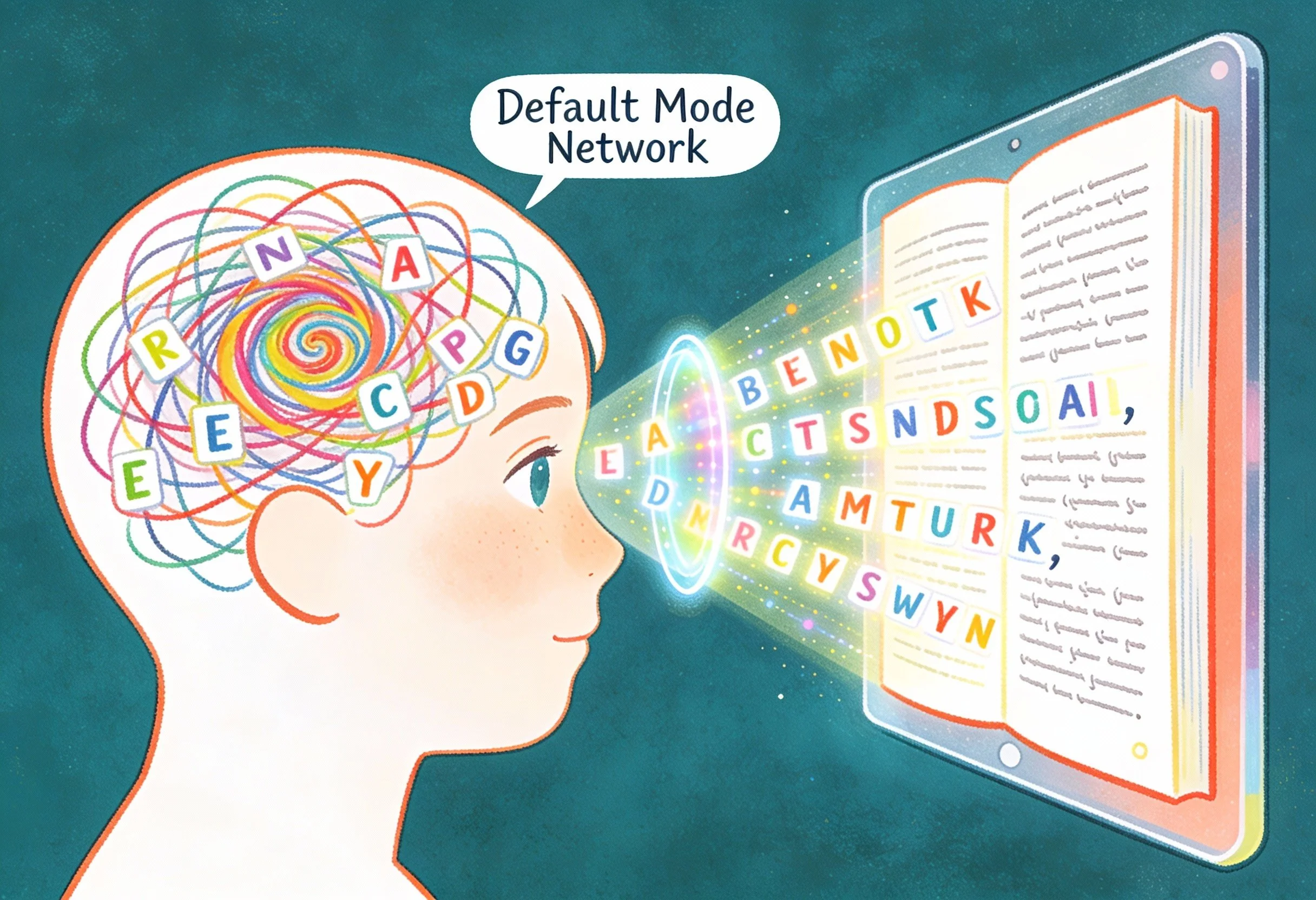
The developing brain works in a way close to this. It grows far more synaptic connections than it will keep and then prunes the ones experience does not reinforce, holding on to the pathways that get used and insulating them with myelin so they connect more thoroughly and a re harder to lose.